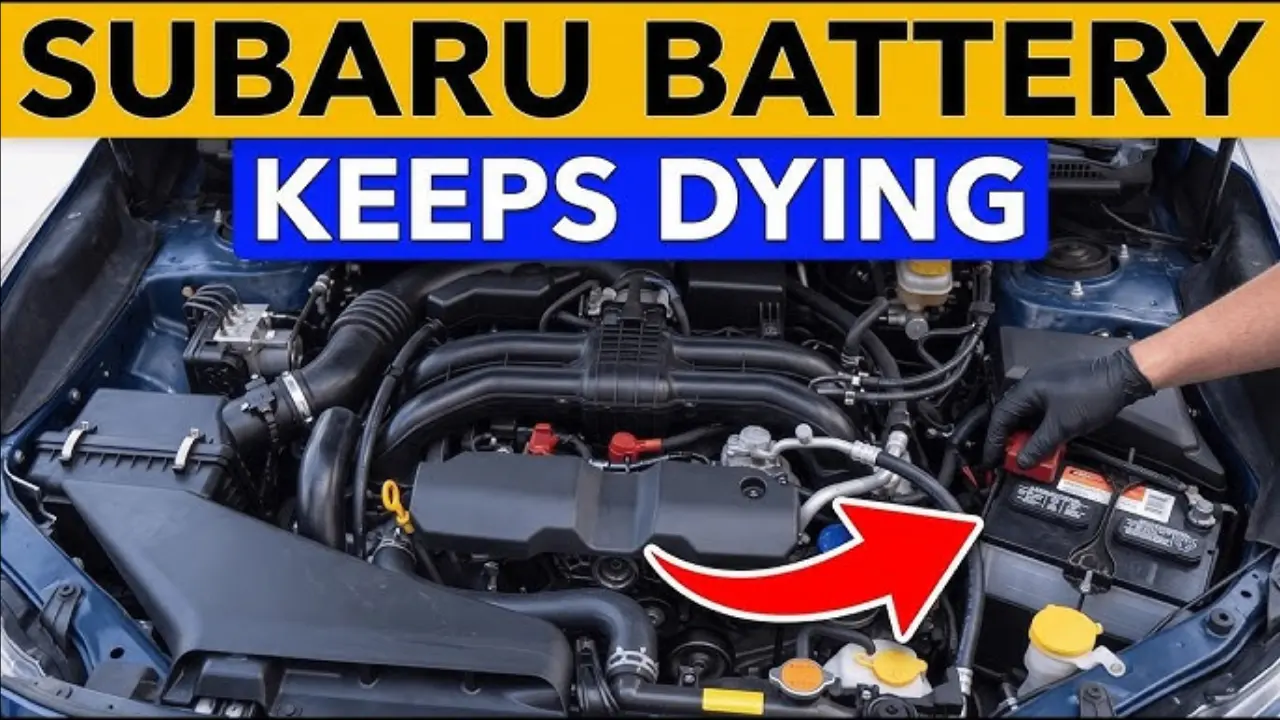
Subaru Class Action Battery Lawsuit Drain Claims, Settlement
The subaru class action battery lawsuit has gained attention from vehicle owners who report repeated dead batteries, unexpected no-start situations, and battery replacements that did not always solve the problem. The dispute centers on allegations that electrical systems in certain Subaru vehicles may continue drawing power after drivers switch off and park their cars.
This issue has developed through more than one legal action. An earlier battery-drain case resulted in a settlement covering selected Subaru vehicles from model years 2015 through 2020. In 2026, another lawsuit was filed involving several newer model years and similar allegations about excessive parasitic battery drain.
What Is the Subaru Battery Drain Lawsuit About?
The earlier subaru class action battery lawsuit alleged that some Subaru vehicles contained a design defect that could cause batteries to drain. Plaintiffs also accused Subaru of violating consumer protection laws and breaching certain warranty obligations.
Subaru denied the allegations. The company maintained that the settlement vehicles were properly designed, manufactured, marketed, and sold, and that warranty coverage had been provided when appropriate.
The case was formally known as In re Subaru Battery Drain Products Liability Litigation, Case No. 1:20-cv-03095-JHR-MJS, in the U.S. District Court for the District of New Jersey.
Instead of continuing the dispute through trial, the parties reached a settlement that included extended battery warranty coverage and possible reimbursement for qualifying expenses.
The Suboxone Lawsuit: What You Need to Know About Legal Claims and Implications
Why Were Subaru Batteries Allegedly Losing Power?
A vehicle battery naturally loses some power while a car sits unused. Modern cars need a small amount of electricity to keep systems such as alarms, computers, clocks, and keyless entry functions working.
Problems can occur when an electrical component consumes much more power than expected while the engine is off. Mechanics often describe this type of unwanted electrical use as a parasitic battery drain.
In the newer lawsuit filed in 2026, plaintiffs allege that one or more electronic control modules may fail to enter or remain in the correct low-power sleep state. According to the complaint, this can create excessive electrical demand and lead to premature battery discharge. These remain allegations rather than established findings of liability.
A weak battery can create several frustrating situations for drivers. A vehicle may start slowly, fail to start after sitting overnight, require a jump-start, or need another replacement battery.
Vehicles Covered by the Earlier Settlement
One of the most important parts of the subaru class action battery lawsuit settlement is the list of vehicles included in the settlement class.
The official settlement website identifies these vehicles:
| Subaru Model | Model Years Covered |
|---|---|
| Subaru Outback | 2015–2020 |
| Subaru Forester | 2015–2020 |
| Subaru Legacy | 2015–2020 |
| Subaru WRX | 2015–2020 |
| Subaru Ascent | 2019–2020 |
The settlement generally covered qualifying people in the United States who currently or previously owned or leased one of the listed settlement vehicles originally purchased or leased in the United States. Specific exclusions also applied.
Owners should therefore avoid assuming that every Subaru vehicle automatically receives the same settlement benefits.
Blingle Lawsuit: Legal Battle Impacting Franchise Growth
What Did the Subaru Battery Settlement Provide?
The settlement provided two major forms of relief: extended warranty coverage and possible reimbursement of qualifying expenses.
Subaru extended certain warranty coverage related to qualifying battery conditions. The exact level of coverage depended on factors such as vehicle age, mileage, whether the battery was the first or a later replacement, and other settlement requirements.
The settlement also provided possible reimbursement for qualifying expenses incurred before the notice date. These expenses could include battery testing, diagnosis, battery replacements, towing, and in certain circumstances other costs connected with a battery failure.
Importantly, settlement eligibility does not mean every dead battery automatically qualifies.
Extended Warranty Coverage Explained
The subaru class action battery lawsuit resulted in specific extended warranty rules for qualifying battery problems.
For a first battery replacement, Subaru agreed to cover 100% of qualifying battery replacement costs for up to five years or 60,000 miles, whichever came first. A temporary 50% benefit also applied to certain vehicles that had already exceeded those limits at the time of the original settlement notice.
Coverage for later replacement batteries was structured differently.
| Vehicle Age/Mileage | Settlement Coverage for Subsequent Batteries |
|---|---|
| Up to 5 years/60,000 miles | 100% |
| Up to 7 years/84,000 miles | 80% |
| Up to 8 years/100,000 miles | 60% |
The limits generally apply based on whichever condition—time or mileage—is reached first. Subaru’s technical warranty bulletin confirms these coverage levels and states that proper battery testing is required to determine whether a battery concern qualifies.
Because many of the covered vehicles are now older, owners should check their exact in-service date and mileage rather than assuming that extended coverage remains available in 2026.
Battery Testing and Diagnosis Requirements
Getting a dead battery does not necessarily prove that a vehicle has the problem alleged in the litigation.
The settlement requires qualifying battery concerns to be evaluated through approved diagnostic procedures. Subaru’s warranty information refers to a Midtronics testing protocol that authorized retailers use when determining whether battery charging or replacement qualifies for extended warranty coverage.
Keeping service records can therefore be very important.
Owners should save battery invoices, diagnostic reports, towing bills, repair orders, dates of jump-starts, and communications with Subaru dealers. These records can help show the history of a repeated battery problem.
Some Battery Problems May Not Qualify
The subaru class action battery lawsuit settlement also contains exclusions designed to separate qualifying electrical issues from battery failures caused by normal owner behavior.
For example, the official settlement FAQ states that a vehicle may not qualify when service records show that the battery issue resulted from leaving interior or exterior lights on overnight or leaving powered equipment connected to an outlet overnight while the vehicle was not operating.
Normal battery age, damaged charging components, aftermarket electronics, poor electrical connections, and other mechanical conditions can also cause battery symptoms.
For this reason, professional electrical testing is usually more useful than simply replacing one battery after another.
New Subaru Battery Class Action Filed in 2026
The story did not end with the earlier settlement.
A separate lawsuit reported in May 2026 names newer Subaru vehicles and alleges that some electrical control modules can fail to enter or maintain an appropriate low-power state after the vehicle is turned off. The plaintiffs claim that this causes excessive parasitic drain and premature battery failures.
According to the reported complaint, vehicles named include certain model years of the Outback, Forester, Legacy, WRX, Ascent, Crosstrek, Crosstrek Hybrid, Forester Wilderness, and Impreza. The claimed years vary by model and range from 2019 through 2025.
The new case is Taylor et al. v. Subaru of America Inc. et al., Case No. 2:26-cv-04935, filed in the U.S. District Court for the District of New Jersey.
It is important to distinguish allegations in an active lawsuit from a finalized settlement or court finding.
Is the 2026 Lawsuit the Same as the Earlier Settlement?
No. Owners researching the subaru class action battery lawsuit may see information about both cases, but they should not treat them as the same legal proceeding.
The earlier litigation resulted in settlement benefits covering specific 2015–2020 model-year vehicles. The 2026 action involves allegations regarding several newer Subaru vehicles and seeks relief for a proposed nationwide class.
A newly filed class action does not automatically mean owners are entitled to payment. Courts may need to address motions, class certification, evidence, liability, or potential settlement terms before compensation becomes available.
What Should Subaru Owners Do About Battery Drain?
Owners experiencing repeated battery failures should first document the problem carefully. Write down when each dead battery occurred, how long the vehicle had been parked, its mileage, and whether the battery required charging, jump-starting, or replacement.
Ask a qualified technician to perform a full battery and charging-system test. If the battery keeps losing power, requesting a parasitic draw test may help identify whether an electrical component remains active while the vehicle is parked.
Owners of vehicles covered by the earlier settlement should also check their in-service date, mileage, service history, and applicable warranty conditions.
Do not replace expensive electronic modules based only on online discussions. A professional diagnosis can determine whether the problem comes from the battery itself, alternator, wiring, electronic module, aftermarket equipment, or another cause.
Why the Lawsuit Matters to Subaru Owners
The subaru class action battery lawsuit matters because a starting battery affects one of a vehicle’s most basic functions: the ability to start when needed.
Repeated failures can cause towing expenses, replacement costs, missed appointments, and concerns about getting stranded away from home.
The earlier settlement also shows why consumers should keep repair records. Reimbursement and warranty programs often require proof showing when repairs happened, what work was completed, and how much the owner paid.
For used-car buyers, reviewing battery service history can also provide useful information about how a vehicle has performed over time.
Frequently Asked Questions
Which Subaru models were included in the original battery settlement?
The settlement included certain 2015–2020 Outback, Forester, Legacy and WRX vehicles, plus 2019–2020 Ascent vehicles.
Did Subaru admit that its vehicles were defective?
No. Subaru denied the allegations and maintained that the settlement vehicles were properly designed and manufactured.
What is parasitic battery drain?
Parasitic drain happens when electrical equipment continues using more battery power than expected after a vehicle is turned off.
Does every Subaru owner qualify for compensation?
No. Eligibility depends on the specific lawsuit or settlement, model year, ownership status, mileage, repair history, timing, and applicable legal requirements.
Is there another Subaru battery lawsuit in 2026?
Yes. A separate case was filed in New Jersey federal court in 2026 involving allegations of excessive battery drain in several newer Subaru models. The allegations have not by themselves established liability.
Final Thoughts
The subaru class action battery lawsuit highlights complaints from drivers who say repeated battery failures created unexpected repair costs and unreliable starts. The earlier case resulted in extended warranty provisions and reimbursement opportunities for qualifying owners of specific Subaru models, while Subaru continued to deny that the vehicles were defective.
Meanwhile, the newer 2026 lawsuit shows that battery-drain allegations remain an active issue for some owners of later Subaru vehicles. Anyone experiencing repeated battery problems should document each failure, obtain professional electrical testing, check applicable warranty coverage, and follow official court or settlement information before assuming they qualify for compensation.