
Boyle’s Law Calculator Calculate Gas Pressure and Volume
A boyle’s law calculator is a useful tool for students, teachers, engineers, and anyone working with gases. It helps you quickly calculate the relationship between the pressure and volume of a gas when the temperature remains constant. Instead of solving formulas by hand, you can enter the known values and get the missing answer in seconds.
This guide explains how a boyle’s law calculator works, the science behind Boyle’s Law, how to use the calculator, and where it can be useful in real life.
What Is Boyle’s Law?
Boyle’s Law is one of the basic gas laws in physics and chemistry. It states that the pressure of a gas is inversely proportional to its volume when the temperature and amount of gas remain constant.
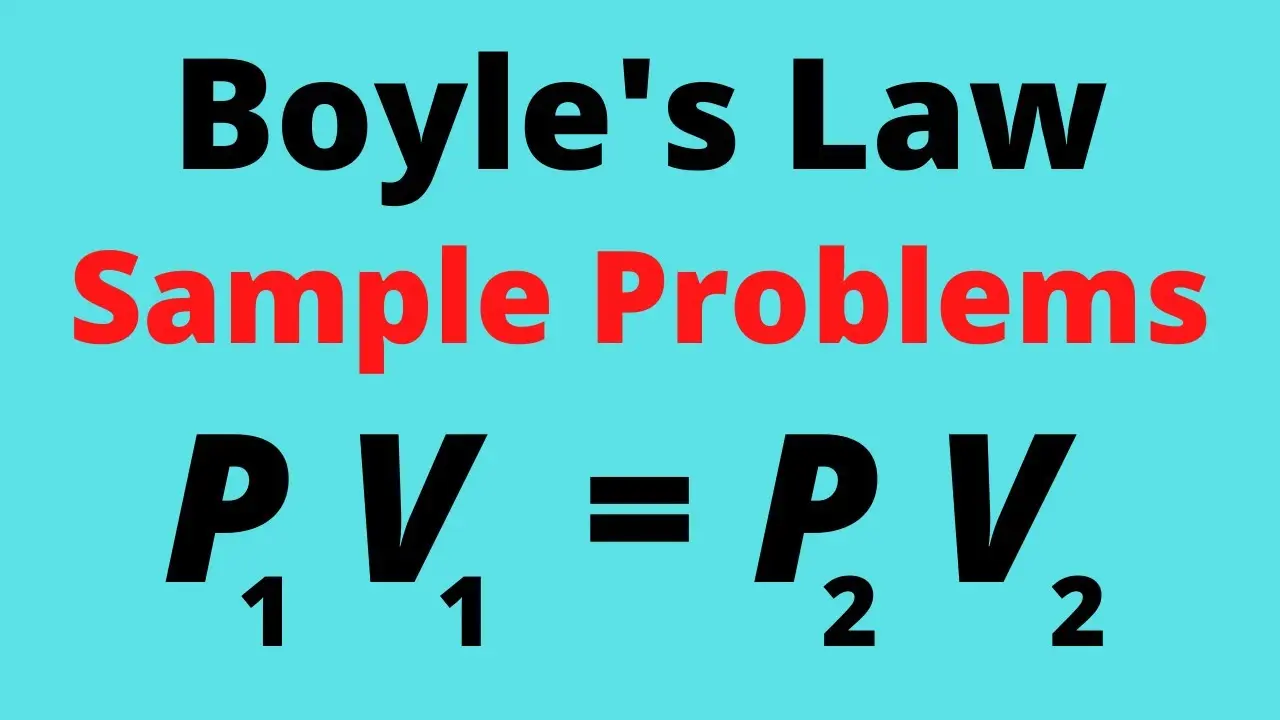
The mathematical formula is:
P₁ × V₁ = P₂ × V₂
Where:
| Symbol | Meaning |
|---|---|
| P₁ | Initial pressure |
| V₁ | Initial volume |
| P₂ | Final pressure |
| V₂ | Final volume |
This equation means that if the pressure increases, the volume decreases. Likewise, if the pressure decreases, the volume increases.
A boyle’s law calculator makes these calculations fast and accurate without requiring manual work.
The Suboxone Lawsuit: What You Need to Know About Legal Claims and Implications
How Does a Boyle’s Law Calculator Work?
A boyle’s law calculator uses the Boyle’s Law equation to solve for the missing variable. You only need to enter any three known values.
For example:
- Initial Pressure = 2 atm
- Initial Volume = 6 L
- Final Pressure = 3 atm
The calculator finds the final volume.
Using the formula:
V₂ = (P₁ × V₁) ÷ P₂
V₂ = (2 × 6) ÷ 3
V₂ = 4 L
Within seconds, the calculator provides the correct result.
Why Use a Boyle’s Law Calculator?
Manual calculations can sometimes lead to mistakes, especially when working with decimals or different pressure units. A boyle’s law calculator helps reduce errors and saves time.
Some major benefits include:
- Fast calculations
- Higher accuracy
- Easy for beginners
- Useful for homework
- Helpful in laboratory work
- Supports different measurement units
Whether you are learning chemistry or solving engineering problems, the calculator makes the process much easier.
Blingle Lawsuit: Legal Battle Impacting Franchise Growth
How to Use a Boyle’s Law Calculator
Using a boyle’s law calculator is simple. Follow these steps:
Step 1: Enter Initial Pressure
Input the starting pressure of the gas.
Step 2: Enter Initial Volume
Type the original gas volume.
Step 3: Enter Final Pressure or Final Volume
Provide one additional known value.
Step 4: Click Calculate
The calculator instantly finds the unknown value using Boyle’s Law.
Many calculators also let you change units such as:
- Pascals (Pa)
- Kilopascals (kPa)
- Atmospheres (atm)
- Liters (L)
- Cubic meters (m³)
- Milliliters (mL)
Automatic unit conversion makes calculations even more convenient.
Example Problems
Here are a few examples to understand how the calculator works.
Example 1
Given:
- Pressure = 1 atm
- Volume = 10 L
- Final Pressure = 2 atm
Formula:
V₂ = (1 × 10) ÷ 2
Answer:
Final Volume = 5 L
Example 2
Given:
- Pressure = 4 atm
- Volume = 2 L
- Final Volume = 8 L
Formula:
P₂ = (4 × 2) ÷ 8
Answer:
Final Pressure = 1 atm
These examples show how a boyle’s law calculator solves problems quickly without complicated calculations.
Real-Life Applications of Boyle’s Law
Boyle’s Law is not just a classroom concept. It is used in many real-world situations.
Scuba Diving
As divers go deeper underwater, water pressure increases. Gas volume inside the lungs decreases. Understanding Boyle’s Law helps divers stay safe during ascent and descent.
Medical Equipment
Respirators and ventilators rely on pressure and volume changes to deliver air to patients.
Syringes
When you pull back the plunger, the volume increases while pressure decreases. This creates suction that draws liquid into the syringe.
Bicycle Pumps
Pushing down the pump handle decreases air volume and increases pressure, forcing air into the tire.
Industrial Gas Storage
Companies use Boyle’s Law when compressing and storing gases in cylinders.
A boyle’s law calculator helps professionals verify calculations before applying them in practical situations.
Common Units Used
Different industries use different pressure and volume units.
Pressure Units
| Unit | Symbol |
|---|---|
| Pascal | Pa |
| Kilopascal | kPa |
| Atmosphere | atm |
| Bar | bar |
| Pounds per Square Inch | psi |
Volume Units
| Unit | Symbol |
|---|---|
| Liter | L |
| Milliliter | mL |
| Cubic Meter | m³ |
| Cubic Centimeter | cm³ |
Many online calculators automatically convert these units before calculating.
Common Mistakes to Avoid
When using Boyle’s Law, remember these important points:
Keep Temperature Constant
Boyle’s Law only works when temperature remains unchanged.
Use Matching Units
Pressure values should use the same unit. Volume measurements should also match.
Enter Accurate Values
Small input errors can produce incorrect results.
Understand the Relationship
Pressure and volume move in opposite directions. Higher pressure means lower volume.
Using a reliable boyle’s law calculator helps prevent these common mistakes.
Boyle’s Law vs Charles’s Law
Many students confuse Boyle’s Law with Charles’s Law.
| Boyle’s Law | Charles’s Law |
|---|---|
| Pressure changes | Temperature changes |
| Volume changes | Volume changes |
| Temperature stays constant | Pressure stays constant |
| Pressure and volume are inversely related | Temperature and volume are directly related |
Understanding the difference helps you choose the correct formula for your calculations.
Who Should Use a Boyle’s Law Calculator?
A boyle’s law calculator is useful for many people.
These include:
- High school students
- College chemistry students
- Physics learners
- Laboratory technicians
- Engineers
- Science teachers
- Researchers
- Medical professionals
- Scuba divers
Anyone working with gases can benefit from this simple calculation tool.
Tips for Accurate Calculations
For the best results:
- Double-check every number before calculating.
- Use consistent units.
- Confirm that temperature stays constant.
- Round answers only after completing calculations.
- Review the formula if results seem unrealistic.
These simple habits improve calculation accuracy.
Frequently Asked Questions
What is a boyle’s law calculator?
A boyle’s law calculator is an online or software tool that calculates gas pressure or volume using Boyle’s Law.
What formula does it use?
It uses:
P₁ × V₁ = P₂ × V₂
Can it calculate pressure?
Yes. It can calculate pressure when the other three values are known.
Is Boyle’s Law always accurate?
It works well for ideal gases under constant temperature. Real gases may show slight differences under extreme conditions.
Is it useful for students?
Yes. Students use it to verify homework, complete laboratory assignments, and better understand gas behavior.
Conclusion
A boyle’s law calculator is an easy and reliable way to calculate gas pressure and volume without manual calculations. By applying the simple equation P₁ × V₁ = P₂ × V₂, the calculator provides quick and accurate answers for educational, scientific, medical, and industrial purposes.
Whether you are studying chemistry, solving laboratory problems, or working in engineering, using a boyle’s law calculator saves time, reduces mistakes, and improves understanding of one of the most important gas laws in science. Learning how to use this calculator also builds a stronger foundation for studying other gas laws and thermodynamics.